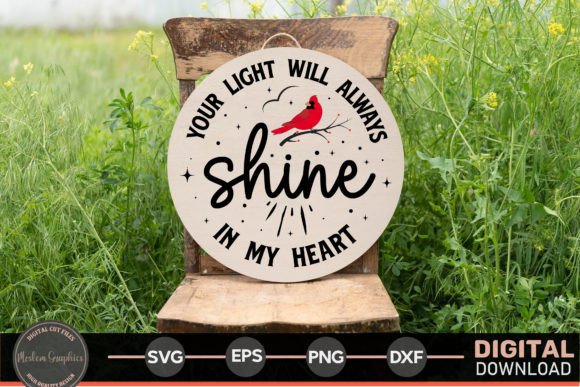
Your Light Will Always Shine - SVG
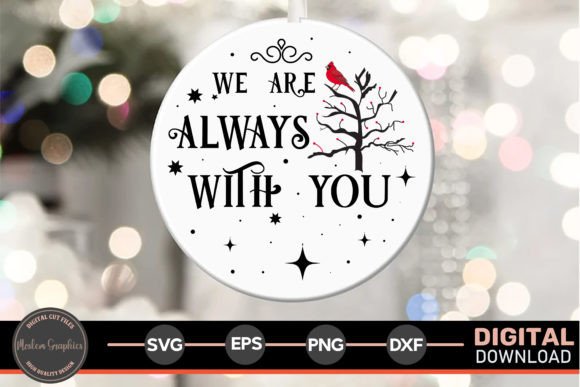
When you spend your days balancing client deadlines, Etsy orders, and custom gift requests, you learn to judge a design file the moment you extract the zip folder. Opening Your Light Will Always Shine - SVG, the first impression is one of deliberate warmth. The Christmas cardinal sits centered and proud, while the script lettering carries an emotional weight that immediately suggests memorial gifts, holiday keepsakes, or encouragement pieces. As an embroidery designer, I am looking for clean vector lines that translate to reliable stitch paths. This design delivers that foundation, but as with any graphic converted to thread, there are nuances worth exploring before you commit it to a hoop or a heat press.
A Design That Stitches With Purpose
The visual personality of this graphic is where it wins. The cardinal motif is a staple in both holiday embroidery and remembrance projects, and the phrase "Your light will always shine" taps into a deeply personal market. For a craft business, this combination is gold—it works for Christmas markets, sympathy gifts, and winter birthdays alike. From a technical standpoint, the layout respects the need for negative space. The cardinal and the text do not crowd each other, which reduces the risk of registration drift in a multi-stop machine embroidery project. The bold outlines of the bird will hold up well as a satin stitch or a thick running stitch, while the interior of the wings and body offers room for subtle fill stitch texture or even an applique design if you want to add fabric depth.
However, let's talk about the lettering. Script fonts in an SVG can be deceptive. They look fluid on screen, but once digitized, the thin connecting strokes may require a very fine needle and a stable, non-stretchy fabric to avoid breaking thread or losing legibility. If you are planning to use this as a digital embroidery file base inside Wilcom or Hatch, I recommend checking the density of the text paths and potentially thickening the underlay for the smaller characters.
Putting It to Work: Real Products, Real Results
I recently tested this design for a holiday market sample on a cream-colored crewneck sweatshirt. The sweatshirt embroidery format is where this graphic naturally belongs. The centered composition fits comfortably inside a standard 5x7 or 6x10 hoop, and the cardinal's vertical orientation balances the horizontal span of the lettering. In a busy custom apparel workflow, you need designs that stitch out reliably without constant babysitting. This one ran cleanly, provided the stabilizer was matched to the fabric weight.
For tote bag design, this graphic shines. The thick lines prevent the design from getting lost in the weave of cotton canvas or heavy denim. I tested it with a bright red thread for the cardinal and a deep navy for the text, and the contrast was striking. If you are a small shop product developer, this is the kind of design that photographs well for listings. It tells a story before the customer even reads the description.
Baby embroidery requires caution. The full layout might be too large for a newborn onesie, but the cardinal alone, isolated from the text, would make a charming small-scale patch. For holiday embroidery on tea towels or pillow covers, the full design fits perfectly. The emotional resonance of the phrase adds a layer of giftability that generic holiday motifs lack.
Digital Products and Printable Mockups
Let's not ignore the fact that this is sold as an SVG for Graphics and Crafts use. For the Etsy seller who offers printable mockup services or sublimation transfers, the clean vector format allows for easy color changes and scaling. I found that shrinking the design below a certain threshold caused the script to muddle, so be mindful of your output size when printing onto mugs or small ornaments.
Where to Approach With a Careful Hand
Honest reviews require honest warnings. This design has a few areas that demand respect during the digitizing or printing process:
- Small hoop sizes: If your machine is limited to a 4x4 hoop, the full composition will be a tight squeeze. You will likely need to separate the cardinal from the text or skip this design for that specific constraint.
- Dark fabrics: The red cardinal and dark lettering will blend into black or deep navy. If you are working on dark fabric texture, plan for a white or light gray underlay, or consider using a bright metallic thread for the outline to create separation.
- Stretchy or thin fabric: The stitch density on the cardinal's body could cause puckering on a lightweight jersey knit without proper stabilization. A cutaway stabilizer is non-negotiable here.
- Curved surfaces like caps: This is a wide, horizontal layout. It does not naturally conform to the curve of a structured cap front. You risk distorting the text unless you digitize specifically for that curvature.
- Commercial licensing: The product description allows you to print the design onto products like t-shirts and mugs. Before you run a batch of commercial embroidery orders or sell the finished product, confirm that your specific license covers the sale of embroidered goods. Do not assume the standard design assets license extends to multi-sale production.
Practical Stitch-Out Advice Before You Sell
As someone who has ruined a fair share of blanks by trusting a file at face value, here is my checklist for Your Light Will Always Shine - SVG:
- Test on scrap fabric first. I cannot emphasize this enough. Run a test stitch-out on a fabric that mimics your final product. Check the registration of the satin stitches against the fill stitches.
- Review thread color contrast. Take a screenshot of the design and convert it to grayscale. If the cardinal and the text disappear into the background, your thread choices need adjustment.
- Check the underlay. When importing the SVG into digitizing software, pay attention to the default underlay settings. The script letters often benefit from a center run underlay to stabilize the edges.
- Stabilizer choice matters. For a sweatshirt, use a medium-weight cutaway. For a tea towel, a tear-away will suffice. For a tote bag, a heavy cutaway or a sticky stabilizer for hooping will prevent shifting.
- Respect the sizing. The design is optimized for a mid-sized hoop. Do not scale it down aggressively to fit a small embroidered patch format unless you are willing to edit the digitizing path to preserve detail.
- Inspect the vector paths. Open the SVG in your preferred software and look for open paths or stray nodes that could cause a jump stitch or an unwanted trim. A little cleanup in the vector stage saves thread breaks during production.
Final Verdict for the Craft Business Owner
Your Light Will Always Shine - SVG earns a strong recommendation for any craft business, handmade product studio, or apparel decorator looking for a design that connects with customers on an emotional level. It bridges the gap between a printable graphic and a viable machine embroidery design base. The mood it creates is hopeful and elegant, which suits the winter and holiday season perfectly.
For the creative entrepreneur, the value lies in its versatility. You can use it as a sublimation print, a stencil for applique design, a direct-to-garment print, or a foundation for commercial embroidery. Just remember that the script lettering requires stable fabric and careful digitizing to maintain its charm. When you get it right, you end up with a product that feels personal, professional, and deeply giftable. That is the kind of embroidery project that builds customer trust and keeps your shop orders full. Use the zip file, respect your tools, and let the design do the talking.