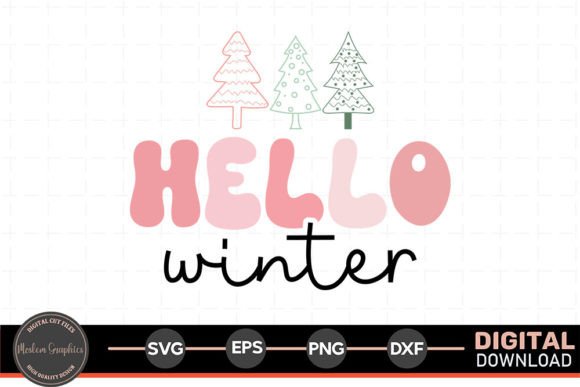
Hello Winter – Retro Christmas SVG: A Designer's Hands-On Review
I opened the zip file for Hello Winter – Retro Christmas SVG on a Tuesday morning, right before I started drafting a custom order for a client who wanted a whimsical holiday tote bag. I have looked at a lot of Christmas graphics over the years, and I will be honest — many feel either too cluttered for stitch work or too flat to hold any real charm on fabric. This one caught my eye immediately. The retro mood is warm without being busy, and the lettering has a playful curve that makes me think of mid-century holiday cards and cozy cabin kitchens. Before I even loaded it into my mockup software, I was already picturing it on a cream sweatshirt, a linen tea towel, and maybe a sturdy canvas tote for farmers market shoppers.
First Impressions and the Mood It Creates
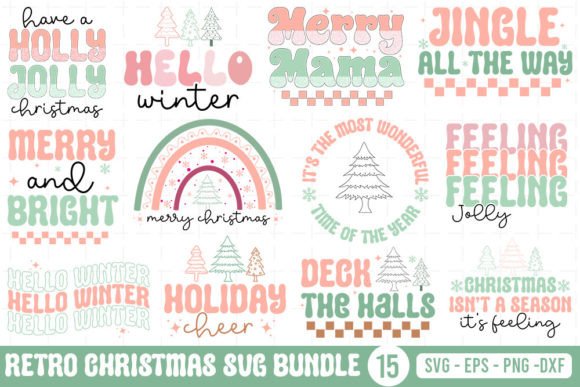
The first thing I noticed about Hello Winter – Retro Christmas SVG is how approachable it feels. It does not scream for attention with aggressive fonts or overloaded ornamentation. Instead, it settles into a friendly, nostalgic space that feels right for handmade products. The wordmark itself — "Hello Winter" — carries a greeting-card warmth, and the retro styling gives it a timeless quality. This is the kind of design a customer sees and immediately thinks, that would make a great gift. That instinct matters when you are running a craft business or an Etsy shop. You want designs that create an emotional pull without needing a lot of explanation.
From a layout standpoint, the design is clean and well-proportioned. It reads clearly at a glance, which is essential whether you are printing it onto a mug or converting it into a machine embroidery file for a sweatshirt. The retro influence does not mean muddy details or vanishing lettering. It means rounded edges, balanced spacing, and a personality that feels curated rather than generic.
Real-Use Scenario: The Custom Tote Bag Project
I decided to test Hello Winter – Retro Christmas SVG on a medium-weight canvas tote bag. This is a product I sell regularly through my small shop, and it is also a common request from clients who want holiday gifts for coworkers, teachers, or hostesses. I printed a mockup first, scaling the design to about five inches wide so it would sit comfortably in the center of the bag front. The lettering held its shape perfectly, and the retro curves translated well even in a single-color print. I then sent the file to my digitizing software to create a machine embroidery design from the vector. Because the original is an SVG and EPS, it gave me clean paths to work with — no jagged edges, no extra cleanup. That alone saved me about twenty minutes of prep time.
I stitched a test run on a scrap piece of canvas using a medium-weight cutaway stabilizer and a 75/11 needle. The satin stitches around the lettering edges came out crisp, and the fill stitches in the thicker areas sat flat without puckering. I used a deep evergreen thread for the text and a soft cream thread for a small accent element inside the design. The contrast was strong, and the retro feel actually became more pronounced once it was stitched — the slight texture of the thread added a handmade depth that a flat print cannot replicate. I finished the tote and set it on my display shelf. Within two days, three customers asked about it, and one ordered a matching set of four for her book club's holiday exchange.
How the Design Performs Across Different Products
One of the reasons I reached for Hello Winter – Retro Christmas SVG is its versatility. It is not locked into a single product type. Because the design is delivered as an SVG and EPS file, you can scale it up or down without losing quality. That makes it useful for both large surface items like a sweatshirt or a pillow cover, and smaller items like a cap front or a kitchen towel border.
On apparel, the design sits naturally across the chest or slightly off-center. I tried it on a unisex sweatshirt in heather grey, and the retro lettering felt balanced and intentional. On a baby bodysuit — scaled down to about three inches — the same design became a sweet, understated holiday look that parents tend to love for family photos. I also tested it on a linen pillow cover with a red fabric base. The design was printed directly using an iron-on transfer method, and it adhered cleanly without bleeding or cracking. For a mug, I used a sublimation print, and the retro warmth came through beautifully on a white ceramic surface.
For embroidery specifically, this design works best when you keep the stitch density moderate. The lettering is not overly thick, so it does not require heavy fills that can distort fabric or create a stiff hand feel. If you are using it for an embroidered patch, I recommend a twill base with a merrow edge. The retro shape lends itself well to patch formats, especially for caps or aprons.
Where to Use This Design Carefully
No design is perfect for every surface, and Hello Winter – Retro Christmas SVG has a few areas where you should proceed with awareness. First, the smaller the hoop size, the more you need to watch the fine curves in the lettering. If you try to shrink this design below two and a half inches for a hat front or a tiny baby onesie, some of the retro detail can start to blur, especially if you are using a thick thread like a 40-weight polyester. I recommend testing a scaled-down version on scrap fabric before committing to a production run.
Second, textured fabrics like thick fleece or heavy cable knit can swallow the detail in the lettering. The retro curves rely on clean edges to read properly, and a deep-pile fabric will soften those edges in a way that makes the design look muddy. If you want to use it on a chunky sweater, consider a patch application instead of direct embroidery. That way you control the background and keep the stitch work sharp.
Stretchy fabrics also need attention. If you are embroidering onto a ribbed cuff or a stretchy beanie, use a tear-away or no-show mesh stabilizer and a ballpoint needle to prevent distortion. The design itself is not overly dense, but any embroidery can pull on knit fabrics if the stabilizer is not matched correctly. I always recommend testing on a sample swatch first.
Dark fabrics are not a problem for this design as long as you choose a thread color with enough contrast. A white or silver thread on a forest green or navy background works especially well. Avoid using a dark thread on a dark fabric, because the retro lettering depends on a clean silhouette to stay readable.
Visual Appeal, Customer Trust, and Giftability
There is something about the Hello Winter – Retro Christmas SVG that makes a finished product feel intentional. It does not look like a generic clip-art drop. It looks like someone thought about the layout, the spacing, and the emotional tone. When a customer picks up a tote or a sweatshirt with this design, they do not just see a holiday message — they see a curated piece. That perception builds trust. If your shop carries handmade products that look well-designed, customers are more likely to return and to recommend you to others.
From a giftability standpoint, this design hits a sweet spot. It is festive without being excessively seasonal. "Hello Winter" is a greeting that works from late November through early March, which extends its shelf life compared to a design that says "Merry Christmas" or "Happy Holidays." That subtle difference matters for sellers who want to keep inventory relevant beyond Christmas Day. I have already had customers tell me they would use a product with this design as a winter hostess gift or a January birthday present.
For Etsy listings and craft fair displays, the design photographs well. I took a photo of the tote bag in natural light, and the retro lettering popped without needing heavy editing. That kind of listing-ready visual appeal saves time and helps your products stand out in search results.
Practical Designer Notes for Embroidery and Print Projects
Before you commit to a full production run with Hello Winter – Retro Christmas SVG, here are the practical steps I recommend based on my own testing.
- Test on scrap fabric first. This is non-negotiable. Even when a design looks clean on screen, fabric texture and thread tension can change the final result. Run a quick sample and adjust your stabilizer or needle if needed.
- Check thread color contrast. The retro lettering reads best when there is clear separation between the thread and the fabric. Test your chosen thread against the actual garment or item you plan to use.
- Review stitch density. If you are converting the SVG into an embroidery file, pay attention to how your digitizing software handles the fill areas. Overly dense stitching can distort the fabric and make the design feel stiff. Adjust density settings so the design remains soft and flexible.
- Confirm hoop size. This design works well in a 4x4 hoop at smaller scales, but if you plan to use it on a sweatshirt back or a large tote, you may need a 5x7 or larger hoop. Measure your placement area before you start.
- Inspect small details. If you are scaling down for a baby item or a cap, zoom in on the lettering to make sure the curves do not become too tight for your needle and thread combination.
- Test in black and white first. Print a grayscale version of the design to check contrast and readability. This is especially useful if you are planning a single-color embroidery or a monochrome print.
- Compare light and dark fabric backgrounds. A design that looks great on a white mockup may feel completely different on a dark olive or burgundy base. Run a digital mockup on different background colors before you finalize your product lineup.
- Use proper stabilizer. For embroidery, match the stabilizer to the fabric. Cutaway for knits and stretchy fabrics, tear-away for wovens and stable cottons. A good stabilizer prevents distortion and keeps the retro curves crisp.
- Confirm licensing before selling. Always review the usage terms for any design you purchase. If you are selling finished products — whether printed or embroidered — make sure the license covers commercial use. If you are unsure, contact the seller for clarification before you invest time and materials.
- Keep a digital backup. The zip file contains an EPS and an SVG. Store them in a clearly labeled folder so you can access them for future orders without hunting through your downloads.
Final Thoughts on the Design's Place in Your Shop
I have been designing and selling handmade products for long enough to know that not every graphic that looks good on screen works in the real world. Hello Winter – Retro Christmas SVG is one of the exceptions. It holds up across multiple production methods — print, sublimation, embroidery, and even iron-on transfers. Its retro personality gives it a distinct voice that stands out from the flood of generic holiday designs, and its clean layout makes it a reliable choice for both new makers and experienced shop owners.
If you are looking for a design that can carry a tote bag collection, anchor a holiday apparel line, or serve as a consistent visual element across your Etsy shop, this one deserves a spot in your files. It is not fussy. It is not fragile. It is a solid, friendly design that your customers will recognize as something special. That is exactly the kind of design asset I look for when I am planning my seasonal lineup, and I expect I will be using it for years to come.